Opportunity
In Brussels, timing gives communication its strategic value. The right message matters when the ecosystem can still use it.
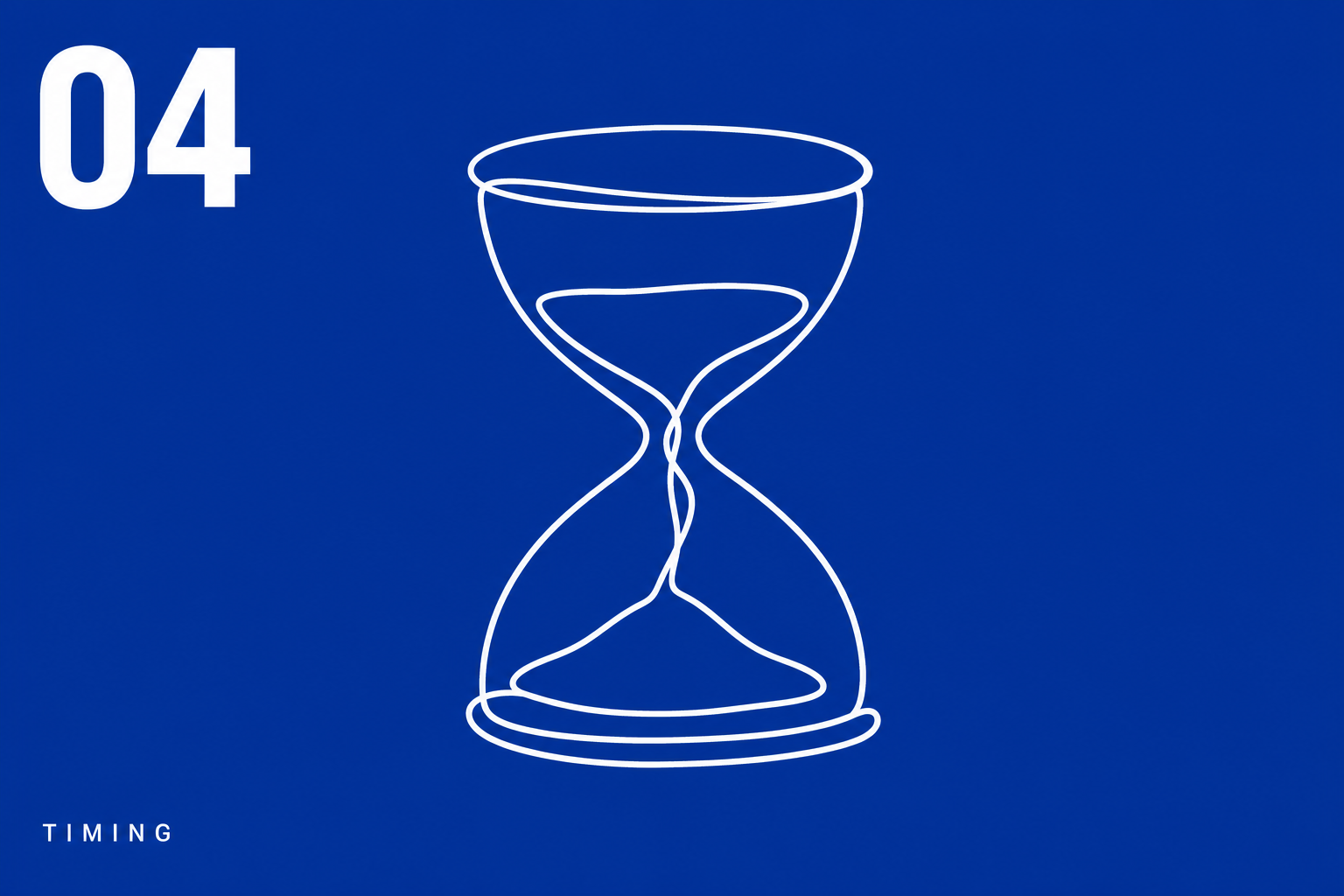
In the European ecosystem, timing is not a production detail. It is one of the conditions that allows a campaign to matter. An association may have the right role, the right stakeholders, a useful frame and credible evidence. If it enters the conversation at the wrong moment, much of that strength remains unused.
Brussels works through windows, not just dates: consultations, work programmes, parliamentary reports, committee debates, Council presidencies, trilogues, stakeholder events, media cycles and reputational shifts. Each window creates a different opportunity: contribution, mobilisation, clarification, implementation or trust-building.
A campaign therefore needs to know which moment it is serving. During a consultation, visibility should help the organisation and its members contribute with clarity and evidence. Before a parliamentary vote, it may need to make consequences easier to understand.
Late campaigning is familiar in European associations. The political window opens, members ask for visibility, the board requests a campaign, the policy team provides input and the communication team is asked to make it accessible. By the time the message is validated, the conversation has moved.
Launching too early can be just as weak. A report, message or visual idea may be ready before the ecosystem has a reason to care. Good timing is readiness matched with relevance.
The external clock
Policy, media and stakeholder windows create different moments of usefulness.
Consultation
contribute
Report
clarify
Committee debate
position
Council presidency
connect
Trilogue
target
Implementation
guide
Reputation shift
respond
This is why sequencing matters. A European campaign should rarely be reduced to a single launch. It needs a rhythm that moves from intelligence and internal alignment to framing, preparation, stakeholder engagement, visibility, amplification and consolidation.
Different campaigns follow different timing logics. A policy opportunity campaign must make the association's contribution useful while decisions are still open. A reputation-sensitive campaign may need faster judgement, listening, member alignment, prepared evidence and a response that recognises legitimate concerns without becoming defensive.
Timing also has an internal dimension. European associations operate with two clocks: the external clock of policy, media and stakeholder attention, and the internal clock of members, working groups, boards and validation. Fast validation is therefore a strategic capability, built through pre-agreed messages, proof, Q&As and escalation routes.
Tone is part of timing. A message that feels constructive before a proposal may sound unrealistic after compromise. A celebratory tone may be inappropriate during a reputational concern.
Timing turns communication into opportunity when it connects relevance, credibility and targeted visibility to the moment where stakeholders can still understand, use and carry the campaign.
From readiness to relevance
01
1. Intelligence
02
2. Alignment
03
3. Preparation
04
4. Visibility
05
5. Amplification
06
6. Consolidation
Key takeaways
- 01
European campaigns work through windows: consultations, votes, reports, Council presidencies, trilogues, events, media cycles and reputational shifts.
- 02
Late campaigns may document a position but often lose the chance to shape understanding.
- 03
Launching too early can also weaken a campaign if the ecosystem has no reason to absorb it.
- 04
Sequencing matters: intelligence, alignment, preparation, stakeholder engagement, visibility, amplification and consolidation should reinforce each other.
- 05
Internal timing — members, boards, working groups and validation — must be reconciled with the external rhythm of the European ecosystem.
Practice — what this means
How to do this.
01
Map the campaign window before fixing the launch date.
Connect the campaign to consultations, votes, reports, Council presidencies, events, implementation phases or reputational shifts.
02
Sequence the campaign before making it visible.
Move from intelligence and internal alignment to stakeholder engagement, public visibility, amplification and follow-up.
03
Reconcile the external and internal clocks.
Policy and media windows move quickly, while boards, members and working groups often need more time to align.
04
Prepare fast validation before the moment arrives.
Pre-agreed messages, evidence, Q&As and escalation routes help the campaign respond without panic or paralysis.
Next principle
Credibility Must Hold
In Brussels, attention becomes influence only when the message can withstand scrutiny.